
Reviewed · UNESCO WORLD HERITAGE TOURS
Private Gyeongju Tour – Explore Gyeongju UNESCO Sites
Gyeongju packs a thousand years of Korean history into one long, rewarding day. This private tour links Bulguksa Temple and Seokguram Grotto with royal tombs, an ancient observatory, a palace pond, and the National Museum, so you see far more than you could comfortably arrange on foot.
I like the private vehicle and flexible pacing, especially for families or groups with mixed interests. I also like the guides’ focus on connecting Silla-era sites with present-day Korean life. The main catch is time: with seven major stops, this is a full day, and traffic can mean several hours in the car, especially from Busan.
Key points at a glance
- Seven major Gyeongju stops: Move from Buddhist temples to royal tombs, astronomy, palace life, and museum collections.
- Private groups only: Choose a private group of 1 to 7 people, or a mid-sized group of 8 to 15.
- English-speaking guides: Guides including Jason, Lily, Joy, Finn, Cynthia, and others explain history and culture throughout the day.
- Comfortable transport: Pickup, drop-off, air conditioning, fuel, parking, and tolls are covered.
- Lunch needs checking: A traditional Korean meal is part of the planned experience, but meals are listed as excluded from the price.
- Two listed entrance fees: Daereungwon and Donggung Palace each cost ₩3,000 per person.
Why this private Gyeongju day works
Gyeongju is not a city you understand by checking off one famous sight. Its treasures are spread across a broad area, from the foothills around Bulguksa and Seokguram to the central royal tomb district and the palace grounds near the National Museum.
That geography is the strongest reason to consider a private tour. You are not figuring out local transport between distant sites, searching for English explanations, or losing time deciding what to skip. Your guide and driver handle the route while you focus on the places themselves.
The format also suits a group with different needs. Families with children, older relatives, and teenagers can adjust the pace more easily than on a large scheduled tour. One family with children and parents in their seventies praised the guide’s patience and flexibility, while another appreciated being able to adjust the route to suit the group.
You should still expect a busy day. The listed visit times give each stop about an hour, but they do not include every transfer. If you travel from Busan, allow for roughly three to four hours of driving in total, depending on traffic. That is a lot of sitting, but a guide can use the road time to explain Korean history and answer questions.
More UNESCO World Heritage Tours in Gyeongju
- Busan: Gyeongju UNESCO Legacy Tour with National Museum
★ 5.0 · 172 reviews - Gyeongju: UNESCO Heritage Tour Including Bulguksa Temple
★ 4.8 · 104 reviews - Gyeongju UNESCO World Heritage Sites and History Full-Day Tour with Lunch
★ 5.0 · 104 reviews
Bulguksa Temple: Silla Buddhism in stone
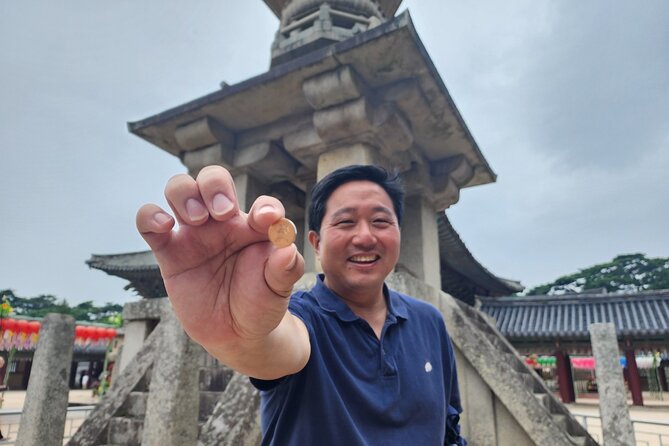
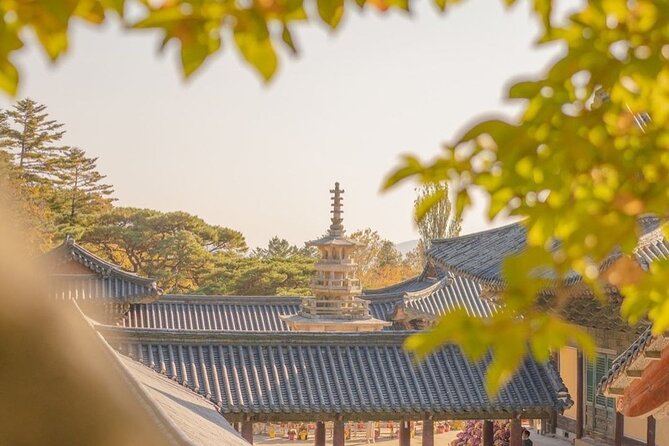
Bulguksa is the grand architectural opening to the day. Built during the Silla period, the temple presents a carefully ordered complex of gates, courtyards, stairways, pagodas, and Buddhist halls.
Your guide can help you read the site instead of simply photographing it. The stonework, elevated terraces, and religious layout all carry meaning, and the temple’s importance comes from the way architecture and Buddhist belief work together.
Plan on walking and using steps here. The grounds are rewarding, but this is not a quick roadside stop. Give yourself time to look at the details and listen to the explanation before rushing to the next viewpoint.
The scheduled visit is about one hour. That is enough for a focused introduction, though a serious student of Buddhist art could happily spend longer. Admission is listed as free.
Seokguram Grotto: a short visit with major impact
Seokguram is one of the tour’s most distinctive stops. The Buddhist sanctuary was built into a mountain cave and is known for its central Buddha image and refined stone sculpture.
The grotto has a different mood from Bulguksa. Bulguksa is an open temple complex with broad courtyards and visible architectural structure. Seokguram is more enclosed and contemplative, with the setting contributing much of its power.
The stop is listed at one hour, which gives you time for the approach, the grotto, and your guide’s explanation. Photography conditions inside may be limited, so listen closely rather than treating this as a picture stop.
The mountain setting also means you should wear shoes suitable for walking. One guide, Eunhee, also known as Daisy, was praised for explaining Silla and Buddhist history with special care at Bulguksa and Seokguram. Guides are assigned by availability, so you should not assume you will receive a particular person, but the company has several guides with strong cultural and historical backgrounds.
Traditional Korean lunch at Hongsi Hanjeongsik
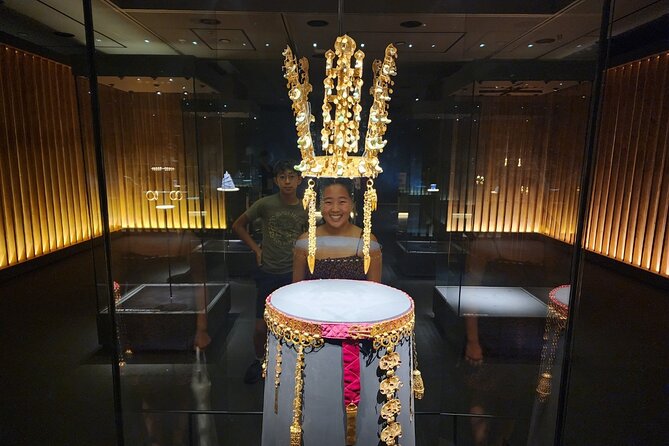
Lunch is planned at Hongsi Hanjeongsik, a traditional Korean restaurant in the Gyeongju area. Hanjeongsik usually means a broad Korean meal served with multiple side dishes, so this is meant to be part of the cultural experience, not just a fast break between sights.
That can be one of the day’s most enjoyable moments. Several guides were praised for finding local restaurants that guests would not easily locate on their own and for explaining the dishes. A good guide can show you how the meal fits into Korean dining customs and help with unfamiliar foods.
Here is the important practical point: the overview presents a local lunch as part of the experience, but the detailed inclusions say meals are not included. The restaurant stop also lists its admission as not included, though that wording may simply reflect the meal cost. Confirm exactly what you pay for lunch before booking or before ordering.
Budget extra money for the meal, and tell your guide about dietary needs at the start of the day. The supplied information does not specify vegetarian, allergy, or special-diet arrangements.
Same country, a completely different kind of day:
- Gyeongju: Private Car Tour with a Licensed Tour Guide
★ 5.0 · 85 reviews - Full day Private Gyeongju UNESCO Heritage Tour : a glimpse into Silla
★ 5.0 · 60 reviews - Guided Car Tour in Geyongju with a Local Guide
★ 5.0 · 38 reviews - Gyeongju: Private Car Charter Taxi Tour
★ 5.0 · 37 reviews
Daereungwon Tomb Complex: royal burial mounds
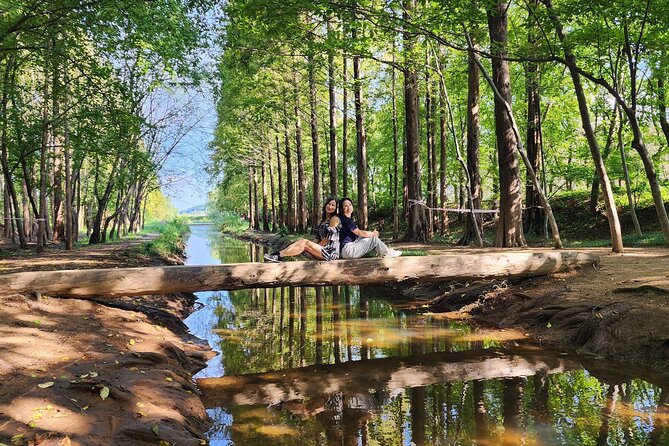
Daereungwon brings you face to face with the scale of the Silla Kingdom. Large grassy burial mounds rise across the complex, marking the resting places of ancient kings and nobles.
The site is visually simple, but it gives you a clear sense of how power was displayed in Silla society. The mounds are not ordinary hills. They were carefully built tombs, and their size hints at the resources and labor once controlled by the royal court.
This stop is especially useful after Bulguksa and Seokguram. The temples show religious life and artistic skill; Daereungwon shifts the focus to rulers, ceremony, and social rank.
Admission is listed as ₩3,000 per person. The visit is scheduled for about an hour. Bring comfortable shoes, since the complex involves walking outdoors. In hot weather, the open grounds can feel exposed, while rain can make the paths less pleasant.
Cheomseongdae: ancient science in a small footprint
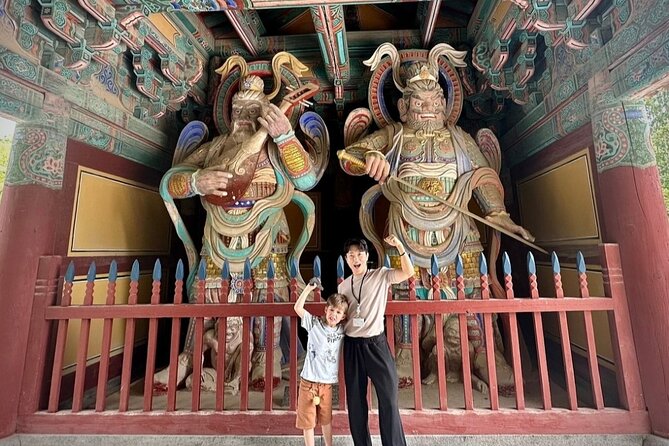
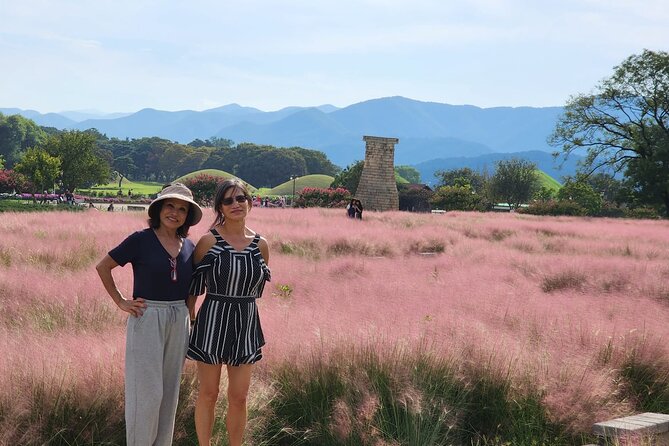
Cheomseongdae is a compact stone observatory and one of Gyeongju’s most recognizable monuments. It is described as the world’s oldest surviving astronomical observatory, and its construction reflects the scientific work of the Silla court.
The structure is made from hundreds of stones, with 362 often linked to the number of days in a year. Your guide can explain how astronomy, farming, calendars, and royal authority were connected.
Do not expect a large building that takes an hour to explore inside. Cheomseongdae is viewed from outside, and the stop is brief in physical scale. Its value comes from the story, the design, and its place among the surrounding historic sites.
This is a good stop for children and teenagers because the basic idea is easy to grasp. One guide used quiz questions to keep younger members involved, a useful touch on a long sightseeing day. Admission is listed as free.
Donggung Palace and Wolji Pond: Gyeongju’s evening showpiece
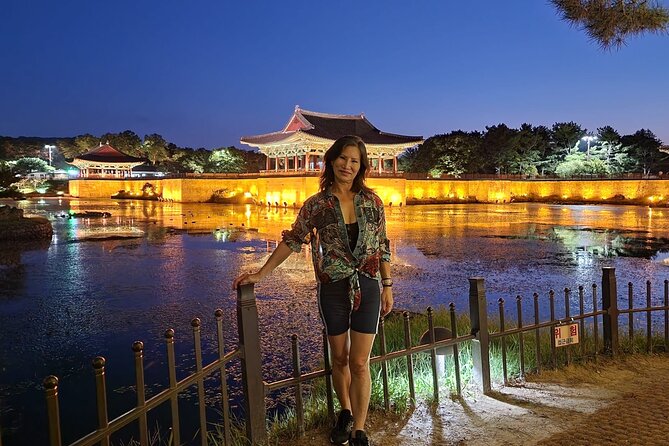
Donggung Palace and Wolji Pond was created in 674 under King Munmu of Silla. The artificial pond formed part of a palace complex and was used for royal occasions.
The site is often most striking later in the day, when the water reflects the pavilions and surrounding lights. If your schedule allows a late visit, ask your guide about timing. One family specifically enjoyed seeing the palace lit at night, though the exact schedule will depend on pickup time, season, traffic, and the day’s pace.
The pond offers a change from the temples and tombs. Instead of stone religious architecture or burial mounds, you get a carefully designed royal setting with water, buildings, and reflections.
Admission is ₩3,000 per person. The stop is listed at about one hour. It can become crowded during holidays and major local events, so flexibility matters. Guides such as Lily and Arthur were praised for changing routes and timing when Chuseok crowds or holiday traffic disrupted the original plan.
Gyeongju National Museum: see the real objects
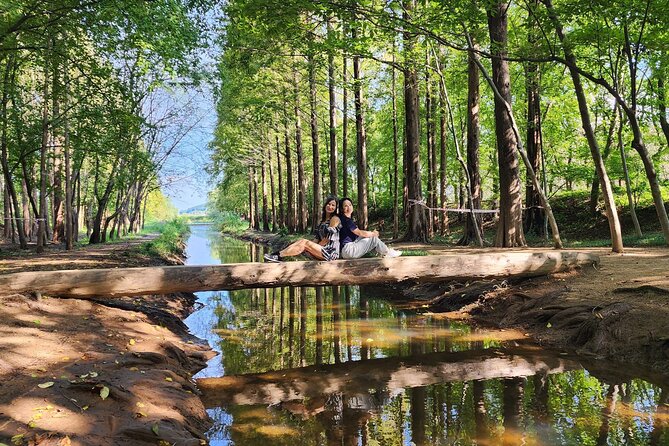
The National Museum gives the day its strongest indoor finish. Here you can see authentic objects unearthed in and around Gyeongju, including artifacts connected with the Silla Kingdom.
After visiting temples, tombs, and palace grounds, the museum helps put those places into context. Objects displayed behind glass can explain how people lived, worshipped, worked, and governed. If you move through the galleries too quickly, you will miss much of the connection between the museum and the monuments seen earlier.
Admission is listed as free, and the scheduled visit is about one hour. Museum hours and gallery access are not provided in the tour details, so confirm the day’s operating schedule if the museum is especially important to you.
Guides, comfort, and the private format
The guide is the part of this experience that most affects its quality. Names appearing in the supplied material include Jason, Lily, Joy, Finn, Cynthia, Arthur, Mimi, Kim, Lee, Nick, Bada Cho, and Eunhee, also called Daisy.
You cannot select a specific guide from the information provided, but the guide’s role is clear. Expect English explanations, help with cultural context, route adjustments, and assistance with group photos. Jason was praised for using a microphone in the vehicle so people in the back could hear, and several guides took photos for families during the day.
The vehicle is air-conditioned, with fuel, parking, and toll fees included. That matters in Gyeongju, where summer heat, rain, and long transfers can wear you down. One family appreciated a clean van and strong air conditioning during hot, humid weather.
The private setup means only your group participates. Groups of 1 to 7 use the small private option, while groups of 8 to 15 can book the larger private format. A private tour does not mean every minute is unstructured. The day still follows a demanding route, but you have more say in stops, pace, and explanations than you would on a shared coach.
One useful point came from a guest who advised setting expectations at the start about whether the guide should accompany you at each sight or let you explore independently after arrival. Discuss this early, especially if your group wants a mix of guided explanations and quiet time.
What the $186.50 price really buys
At $186.50 per person, the value depends heavily on group size and pickup location. For one or two people, it is a premium day, but you are paying for a private vehicle, a qualified English-speaking guide, pickup and drop-off, fuel, parking, and tolls.
For a family or group of several people, the cost becomes easier to justify. You avoid arranging multiple taxis, coordinating long-distance transfers, and paying separate transport costs throughout the day. You also gain a guide who can explain what you are seeing rather than leaving you with only a monument and a short sign.
Add the two listed admission fees, ₩3,000 for Daereungwon and ₩3,000 for Donggung Palace per person. Meals are not included in the detailed price information, despite the description of a local lunch, so ask for a clear cost breakdown.
The tour is best value when you want to cover all seven major stops in one day. If you prefer slow museum visits, long temple walks, or unplanned café time, the schedule may feel too tight.
Who should book this Gyeongju tour?
I would choose this tour for a first visit to Gyeongju, especially if you are staying in Busan and want to see the city’s main historic sites without managing the transport yourself.
It also suits:
- Families with children and older relatives
- Groups that want an English-speaking guide
- Visitors interested in Buddhist art and Korean history
- People who want private transportation and flexible timing
- Groups of up to 7, or 8 to 15 using the larger private option
- Anyone trying to cover Gyeongju’s major sights in a single day
I would hesitate if your group dislikes car travel or wants a slow, unhurried day. The route is ambitious, and traffic can take three to four hours of the day when coming from Busan.
Wear good walking shoes, check the weather, and plan for outdoor exposure at the tombs and observatory. Tell the guide early if someone needs frequent bathroom breaks, a slower pace, or fewer stops. One poor experience involved a family with a five-year-old and a 90-year-old relative whose needs were not fully matched to the pace, so honest planning matters.
Should you book it?
Book this tour if you want a well-packed introduction to Gyeongju, value personal explanations, and prefer a private vehicle to a complicated day of local transport. The strongest elements are the range of sites, the English guidance, and the flexibility shown by guides such as Jason, Lily, Finn, Cynthia, and Arthur.
Before paying, confirm the lunch cost, your pickup point, the expected driving time, and how much walking your group can manage. With those details settled, this is a practical and worthwhile way to connect Gyeongju’s temples, tombs, palace grounds, science, and museum collections in one day.
FAQ
How long does the private Gyeongju tour last?
The tour lasts approximately 8 to 9 hours.
How many people can join the private tour?
A private group can include 1 to 7 people. A mid-sized private option is available for groups of 8 to 15 people.
Is pickup and drop-off included?
Yes. Pickup and drop-off are included at select locations.
Is transportation provided?
Yes. The tour includes an air-conditioned vehicle, fuel surcharge, parking fees, and toll fees.
Is the tour conducted in English?
Yes. An English-speaking guide is provided.
Are meals included in the price?
The detailed inclusions state that meals are not included. A local lunch at Hongsi Hanjeongsik is planned, so confirm the meal cost before booking.
What entrance fees must I pay?
Daereungwon Tomb Complex costs ₩3,000 per person, and Donggung Palace and Wolji Pond costs ₩3,000 per person. The other listed attractions show free admission.
Can I cancel for a full refund?
Yes. You can cancel at least 24 hours before the experience start time for a full refund. Cancellations or changes made within 24 hours are not accepted for a refund.
Just added around Gyeongju
- Private World Heritage Gyeongju Taxi Tour★ 5.0 · 12 reviews
- Guided Car Tour in Geyongju with a Local Guide★ 5.0 · 38 reviews
- Gyeongju: Private Car Charter Taxi Tour★ 5.0 · 37 reviews
- From Daegu: Gyeongju UNESCO Tour 7 Highlights with Bulguksa★ 4.6 · 5 reviews
- From Busan: Gyeongju Small Group Photo Tour & Hotel Pick-up★ 5.0 · 3 reviews
- From Busan: Busan & Gyeongju One Day Tour★ 5.0 · 5 reviews
- Busan: 7 Highlights Gyeongju City One Day Tour★ 4.9 · 10 reviews
- Full day Private Gyeongju UNESCO Heritage Tour : a glimpse into Silla★ 5.0 · 60 reviews
UNESCO World Heritage Tours, compared.
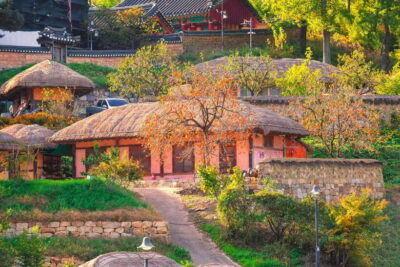
Gyeongju UNESCO World Heritage Guided Day Tour
Read our review →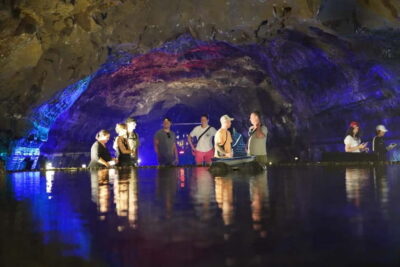
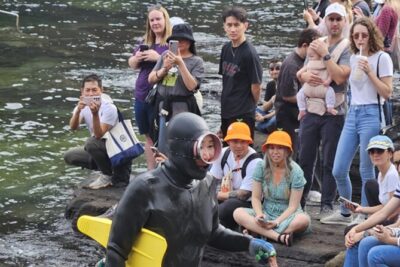
East Jeju Essentials – Seongsan Ilchulbong (UNESCO) & Haenyeo
Read our review →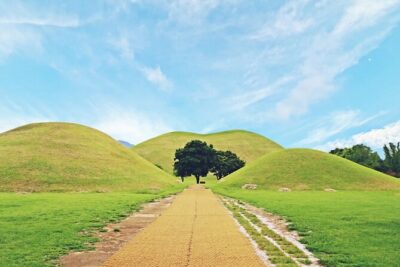
Gyeongju UNESCO World Heritage Guided Day Tour from Busan
Read our review →
Jeju Southern UNESCO Full Day Tour with Mt.Halla
Read our review →
Jeju island Southern UNESCO Day Tour With Hallasan MT
Read our review →Browse the lists this tour appears in