
Reviewed · UNESCO WORLD HERITAGE TOURS
Full day Private Gyeongju UNESCO Heritage Tour : a glimpse into Silla
Gyeongju is the place to see Korea’s ancient Silla kingdom in one focused day. This private tour links the grand Bulguksa Temple and Seokguram Grotto with royal tombs, a museum, traditional houses, and the palace pond of Wolji. The story moves from Buddhist faith to royal power, science, and daily life.
I like the private vehicle and flexible guide, especially when a family wants to slow down at a temple or skip a stop. I also like the food break: the usual tteokgalbi, or grilled short-rib patties, gives the day a proper Korean meal instead of a rushed snack.
The catch is the price, $256.42 per person, with lunch not included. An 11-hour day also packs in a lot of walking, stairs, and information, so you should book this for access and context, not for a leisurely stroll.
Key points before you book
- Seven major Silla-era sights in one day: Bulguksa, Seokguram, the Silla Arts and Science Museum, Daereungwon, Gyochon Village, the National Museum, and Donggung Palace with Wolji Pond.
- A private guide shapes the day: Guides including Mimi, Wookie, William, John, Carrie, and Tom Kim have adapted timing and explanations to suit families, adults, and history-minded visitors.
- Seoul access can include KTX: The Seoul option includes the Korean bullet train, followed by pickup in Gyeongju.
- Lunch is traditional but separate: Tteokgalbi is the featured meal, yet the booking price does not include lunch.
- The day is built for history fans: You get Silla context at every stop, not just photographs and quick entrance visits.
- Weather matters: Poor weather can lead to a new date or a full refund, and cancellation is free up to 24 hours before departure.
Why Gyeongju works so well as a private day trip
Gyeongju was the capital of the Silla kingdom for roughly a thousand years. That long period left temples, tombs, royal grounds, artworks, and old village traditions scattered across the modern city.
The challenge is distance. The sights do not form one compact museum district, and the most important temple and grotto are outside the central area. A private air-conditioned vehicle saves you from piecing together local transport while carrying the day’s historical thread from one place to the next.
That thread is the real value. At Bulguksa, you meet Silla Buddhism through architecture. At Daereungwon, you see the kingdom’s burial customs. At Cheomseongdae, you get a glimpse of science and astronomy. At the museum, objects help tie everything together.
The tour runs about 11 hours, so this is not a light outing between coffee stops. You will get a broad look at Gyeongju, but each stop has a set time. If you want long museum study or slow photography, tell your guide early.
The private format helps here. Past guide pairings have included Mimi, Wookie, William, John, Carrie, Bonita, Tom Kim, Solomon, and Mrs Han. The strongest pattern is not a fixed script, but guides changing the pace and explanations to match the group. John, for example, adjusted the focus for a family with teenagers, while Paul reportedly added or removed stops as the group preferred.
More UNESCO World Heritage Tours in Gyeongju
- Private Gyeongju Tour – Explore Gyeongju UNESCO Sites
★ 5.0 · 272 reviews - Busan: Gyeongju UNESCO Legacy Tour with National Museum
★ 5.0 · 172 reviews - Gyeongju: UNESCO Heritage Tour Including Bulguksa Temple
★ 4.8 · 104 reviews
Bulguksa Temple: Silla stonework at its grandest
Bulguksa is the day’s big architectural opening. UNESCO recognizes it as a major Buddhist work, and the temple gives you a strong sense of how Silla rulers used religious buildings to express power, order, and devotion.
Allow about an hour. Your guide can explain the temple’s layout and point out the details that are easy to miss when you walk through alone. The stone terraces, gates, pagodas, and carved elements reward a closer look, while the surrounding hills add seasonal color.
Spring brings cherry blossoms. Fall brings colorful foliage. Those seasons make the grounds especially attractive, but the temple remains the essential visit in any season.
The limitation is time. One hour lets you see the main areas and hear the basic story, but it will not satisfy someone who wants to inspect every carved detail. Wear shoes suited to stairs and uneven surfaces. The day includes a moderate amount of walking, with steps at some sites.
Seokguram Grotto and the Buddhist heart of the tour
Seokguram is usually paired with Bulguksa because the two sites show different sides of Silla Buddhism. Bulguksa presents the temple complex in the open air. Seokguram gives you a more enclosed, sculptural setting, with devas, bodhisattvas, disciples, and a central Buddha carved into the grotto space.
The visit lasts about an hour and admission is included. This is a place where a guide adds real value. Without context, you may simply see a carefully protected stone chamber. With an explanation of the figures and the religious purpose of the site, the sculpture becomes easier to read.
The tour information notes the grotto as a core part of the day, and one useful practical point comes through clearly: make sure it is actually included in your schedule. The stop can be overlooked if plans change, yet it is one of Gyeongju’s most important experiences.
After the temple and grotto, lunch is usually tteokgalbi, grilled patties made from short rib meat. Lunch is not included in the price, despite the meal being a featured part of the day, so budget separately. Vegetarian food can be arranged if you request it when booking.
Tteokgalbi lunch, with time to taste Gyeongju
The meal is more than a fuel stop. Tteokgalbi offers a traditional Korean flavor in a form that is easy to share, and several guide pairings have included a well-liked lunch in central Gyeongju. One group also stopped for coffee at a modern restaurant, while another enjoyed a bakery nearby.
Do not expect the exact restaurant or menu to be guaranteed from the tour description. Your guide may recommend a place based on timing and your preferences. That flexibility is useful, especially for families or vegetarians, but it also means you should confirm the lunch plan at the start of the day.
I would treat lunch as one of the tour’s pleasures, not as an included benefit. The price covers transportation, guiding, and listed entrance fees, but not food.
Same country, a completely different kind of day:
- Gyeongju UNESCO World Heritage Sites and History Full-Day Tour with Lunch
★ 5.0 · 104 reviews - Gyeongju: Private Car Tour with a Licensed Tour Guide
★ 5.0 · 85 reviews - Guided Car Tour in Geyongju with a Local Guide
★ 5.0 · 38 reviews - Gyeongju: Private Car Charter Taxi Tour
★ 5.0 · 37 reviews
Silla Arts and Science Museum: a visual history lesson
The Silla Arts and Science Museum gives the day a change of pace. Here, you can watch an animated film about the thousand-year Silla kingdom and see the period presented through a more modern format.
The stop lasts about an hour, and admission is included. It may appeal most to children, teenagers, and anyone who finds a film easier to follow than a long museum label. A guide can use the presentation to connect the earlier temple visit with Silla art, technology, and political life.
This is also the stop most likely to divide opinions. Visitors who prefer original objects and quiet galleries may find the animated presentation less compelling than the National Museum. Families may appreciate the break from outdoor walking.
Daereungwon and Cheomseongdae: royal tombs and star watching
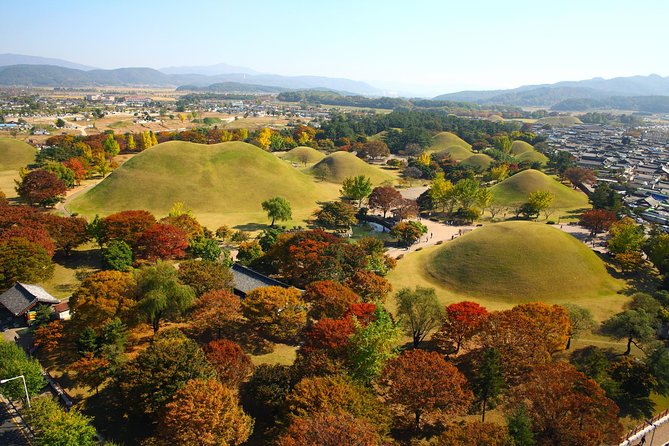
The Daereungwon Tomb Complex brings you face to face with the power of Silla’s rulers. Large rounded burial mounds mark the resting places of kings and nobles, creating an unusual scene in the middle of modern Gyeongju.
The scheduled visit is about 30 minutes, so expect an overview rather than a long archaeological study. The grass-covered mounds are impressive from the outside, and the complex helps explain how burial sites shaped the city.
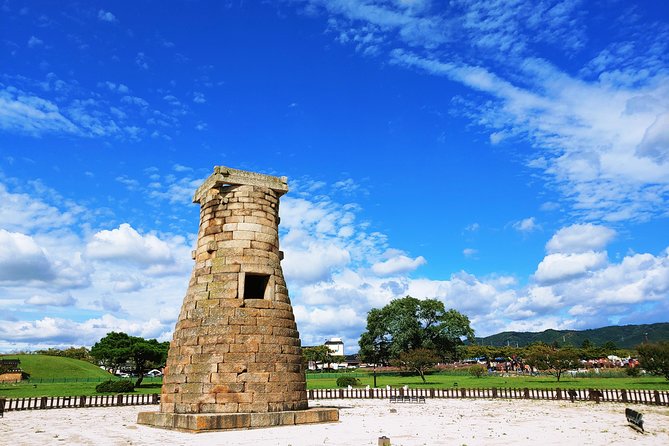
Near the tombs is Cheomseongdae Observatory, described as the oldest surviving astronomical observatory in Asia. Its name means star-gazing tower. The small stone structure is easy to underestimate, but it offers a useful reminder that Silla culture was not only about temples and royal ceremony.
Ask your guide to connect the observatory with the tombs and palace grounds. That gives the central Gyeongju stops a clear theme: royal authority depended on religion, ritual, science, and control of time.
Gyochon Hanok Village: old forms in a living setting
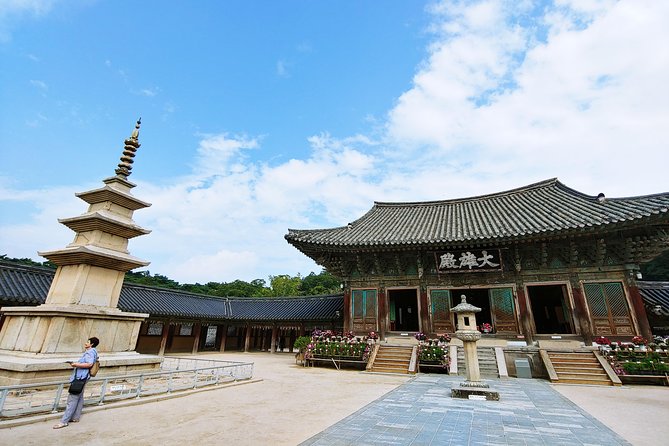
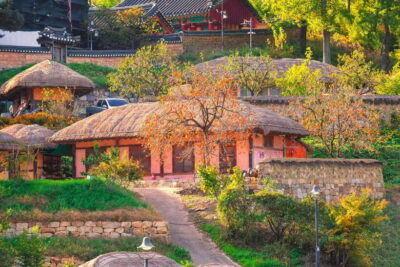
Gyeongju Gyochon Traditional Village offers a quieter look at Korean building traditions. You will see older historic structures alongside newly built hanok, or traditional-style houses, and get a sense of how homes and village spaces once functioned.
The stop lasts about an hour and has no admission charge. It is less about one knockout monument and more about texture, scale, and everyday life. After several major heritage sites, that change helps the day breathe.
The village should not be mistaken for an untouched medieval settlement. The mix of old buildings and newer hanok is part of what you are seeing. A good guide can explain that contrast rather than presenting every structure as ancient.
This is also a flexible stop. Guides have adjusted plans for groups, added nearby points of interest, or recommended extra places for later visits. If traditional homes interest you more than the film museum, say so.
Gyeongju National Museum: the objects that make Silla real
The National Museum is where the day’s broad story gains physical detail. Its collection includes relics from a thousand years of Silla rule, giving you the chance to see the art, religious objects, and historical remains that cannot be understood fully from buildings alone.
Admission is free, and the planned visit lasts about an hour. That is enough for a guided introduction, but the museum could easily take longer if you read every display.
The order of the day matters. After Bulguksa, Seokguram, the tombs, and the observatory, museum objects have a stronger setting in your mind. You can better understand why a sculpture matters or how a royal object fits into Silla society.
If you are traveling with children, ask your guide to keep the museum visit focused. If you are an adult interested in Korean dynastic history, Buddhism, or art, you may want to trade some time elsewhere for extra galleries.
Donggung Palace and Wolji Pond: save room for the final view
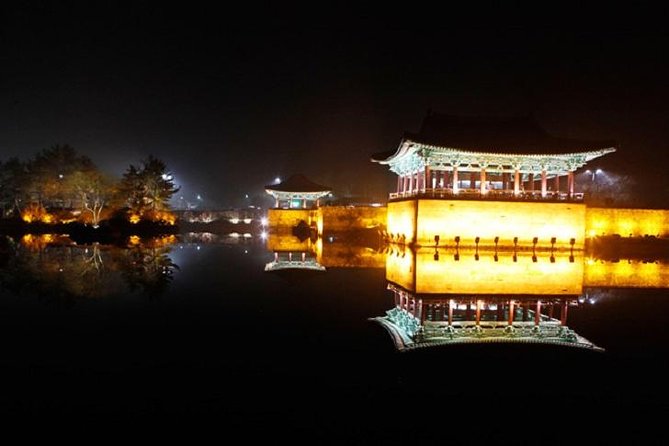
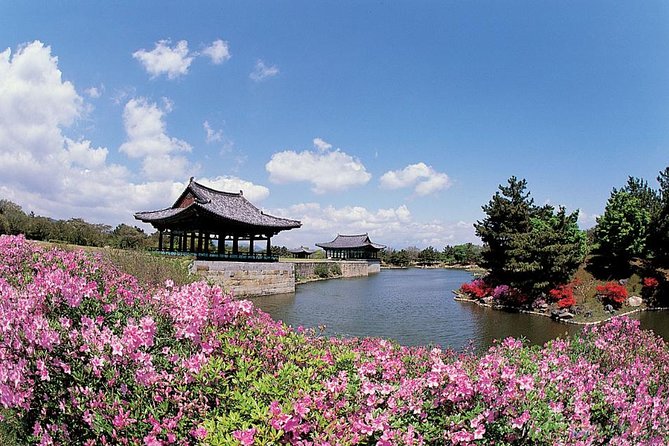
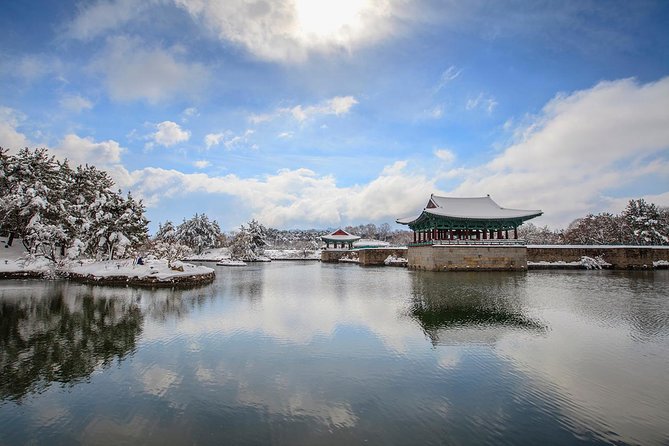
Donggung Palace and Wolji Pond, once called Anapji, is one of the most atmospheric stops. The palace grounds and water reflect the refined side of Silla court life, and the site is especially known for its night view.
The planned visit lasts about an hour, with admission included. If your timing reaches the area near evening, the reflections and lighting can make this a memorable finish. The schedule does not promise a nighttime arrival, though, so you should not book this tour solely for the illuminated view.
The pond also works well as a final chapter. After tombs and religious monuments, you see a royal pleasure ground shaped for ceremony and beauty. It rounds out the day’s picture of Silla as a sophisticated kingdom, not simply an old dynasty with surviving ruins.
What the private guide adds
This tour succeeds or fails on the guide. The strongest guide pairings have been praised for clear English, safe driving, patience, and the ability to alter the day without losing its purpose.
Wookie adjusted the route to suit the group. Paul was described as flexible about adding or skipping sights. Tom Kim was noted as a safe driver and even helped a group reach Yangdong Historical Village during rainy weather. Carrie added a strawberry greenhouse stop for two children, though that was outside the planned route.
Those examples do not guarantee a particular guide or extra stop. They do show why the private format can be worth paying for. You can ask for more Buddhism, royal history, war and unification, architecture, food, or family-friendly explanations before the day begins.
Some guides are especially suited to adults who want detailed historical discussion. Families with teenagers should explain their interests in advance. The guide may be able to add stories, adjust the museum visit, or build a clearer theme around the sites.
Is $256.42 per person fair value?
At $256.42 per person, this is an expensive day, especially if you are traveling alone or as a couple. You are paying for a private vehicle, a professional guide, hotel pickup and drop-off in Gyeongju or Busan, bottled water, and entrance fees for the listed paid sites. Lunch remains extra.
The value improves as your group grows, since it is a private activity and group discounts are available. The price also makes more sense if you are staying in Busan or Seoul and want the transport problem handled for you.
The Seoul option adds KTX, Korea’s bullet train, from Seoul. The train upgrade can turn Gyeongju into a practical long day instead of requiring a separate overnight stay, but it also makes the schedule demanding. You need to be comfortable with an early start and a full return journey.
A cheaper independent visit may suit confident planners with more time. This private day suits you if you value a driver, a custom pace, and historical explanation more than the lowest possible cost.
Practical details for a smoother day
Hotel pickup and drop-off are available in Gyeongju and Busan. The Seoul option includes KTX, with a guide meeting you in Gyeongju. Add your country code to your phone number when booking so the operator can contact you.
Most people can take part, and the tour is near public transportation. Still, expect moderate walking and some stairs, particularly around the temple and grotto. Good weather is required. If weather cancels the experience, you are offered another date or a full refund.
You can cancel for a full refund up to 24 hours before the local start time. Changes made inside that 24-hour window are not accepted, and the amount paid is not refunded for a late cancellation.
The activity has a 4.9 rating from 60 reviews, with 98 percent recommending it. That strong result matches the most consistent praise: guides who explain Korea clearly, drive safely, answer questions, and make reasonable adjustments.
Should you book this Gyeongju tour?
Book it if you have one day, care about Silla history, and want the main sights connected by a real guide rather than a succession of photo stops. It is particularly useful for first-time visitors based in Busan, families, and anyone taking the KTX from Seoul.
Think twice if you are watching every dollar, dislike long days, or want to linger at one museum or temple. The cost is high, lunch is extra, and the schedule covers a lot of ground.
Before booking, share your interests and group needs. Ask to protect the Seokguram visit, confirm the lunch plan, and tell the operator if you need vegetarian food. With the right guide match, this is a practical way to make sense of Gyeongju’s temples, tombs, science, art, and royal life in a single, very full day.
FAQ
How long does the private Gyeongju tour last?
The experience lasts approximately 11 hours.
Is hotel pickup included?
Yes. Hotel pickup and drop-off are included for locations in Gyeongju and Busan. The Seoul option includes KTX travel to Gyeongju.
Is lunch included in the tour price?
No. Lunch is not included. Tteokgalbi, or grilled short-rib patties, is the featured meal, and a vegetarian option is available if requested when booking.
Are entrance fees included?
Yes. Entrance fees listed for Bulguksa Temple, Seokguram, the Silla Arts and Science Museum, Daereungwon Tomb Complex, and Donggung Palace and Wolji Pond are included. Gyochon Village and the National Museum are listed as free.
Can I cancel for a full refund?
Yes. You can cancel at least 24 hours before the local start time for a full refund. Cancellations and changes made less than 24 hours before the start are not accepted for a refund.
Is the tour private?
Yes. Only your group participates in the private activity.
More Full-Day in Gyeongju
- Full Day Tour In The Soop BTS Ver in PyeongChang Filming Location
★ 5.0 · 1,709 reviews - Small Group Full Day Busan Tour (Max 6 Pax)
★ 5.0 · 1,464 reviews - Seoul City Private Full-Day Tour Including Lunch
★ 5.0 · 469 reviews - Jeju Southern UNESCO Full Day Tour with Mt.Halla
★ 5.0 · 400 reviews
More Historical Tours in Gyeongju
- Private World Heritage Gyeongju Taxi Tour
★ 5.0 · 12 reviews - From Busan: Gyeongju UNESCO World Heritage Guided Day Tour
★ 4.8 · 1,250 reviews - Gyeongju UNESCO World Heritage Guided Day Tour from Busan
★ 5.0 · 660 reviews - Seoul: Evening Dark History, Folklore & Ghost Story Walking Tour
★ 5.0 · 593 reviews
Just added around Gyeongju
- Private World Heritage Gyeongju Taxi Tour★ 5.0 · 12 reviews
- Guided Car Tour in Geyongju with a Local Guide★ 5.0 · 38 reviews
- Gyeongju: Private Car Charter Taxi Tour★ 5.0 · 37 reviews
- From Daegu: Gyeongju UNESCO Tour 7 Highlights with Bulguksa★ 4.6 · 5 reviews
- From Busan: Gyeongju Small Group Photo Tour & Hotel Pick-up★ 5.0 · 3 reviews
- From Busan: Busan & Gyeongju One Day Tour★ 5.0 · 5 reviews
- Busan: 7 Highlights Gyeongju City One Day Tour★ 4.9 · 10 reviews
- Gyeongju: Private Car Tour with a Licensed Tour Guide★ 5.0 · 85 reviews
UNESCO World Heritage Tours, compared.
Gyeongju UNESCO World Heritage Guided Day Tour
Read our review →
East Jeju Essentials – Seongsan Ilchulbong (UNESCO) & Haenyeo
Read our review →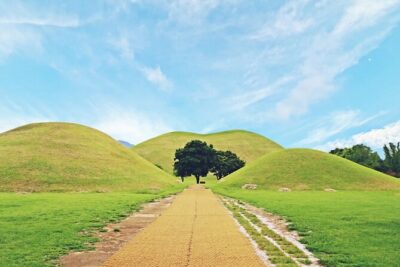
Gyeongju UNESCO World Heritage Guided Day Tour from Busan
Read our review →
Jeju Southern UNESCO Full Day Tour with Mt.Halla
Read our review →
Jeju island Southern UNESCO Day Tour With Hallasan MT
Read our review →Browse the lists this tour appears in