
Reviewed · CITY TOURS
Busan: 7 Highlights Gyeongju City One Day Tour
Gyeongju is the kind of place where history is not shut behind museum doors. Silla tombs rise beside cafés, a 1,000-year-old temple shares the day with a chewy 10-won snack, and a rebuilt wooden bridge glows beside old village houses. This tour gives you seven major sights without making you arrange the long trip from Busan yourself.
I like the efficient route and the guides’ friendly, clear approach. Leo is especially good at drawing people into the story, while the multilingual guiding on some departures helps mixed-language groups. I also like the generous spread of photo stops, from Bulguksa’s stone pagodas to Woljeonggyo at the end of the day.
The tradeoff is simple: this is a full day, and Gyeongju is spread out. You will see a great deal, but you will not have the slow, lingering pace of a private trip. Daereungwon’s admission is also not included, and meals are your responsibility.
Key points at a glance
- Seven major Gyeongju stops: Visit Bulguksa, Hwangnidan-gil, Daereungwon, Cheomseongdae, Gyochon Traditional Village, Woljeonggyo, and, from September 15, 2025, Daewangam Suspension Bridge.
- A practical Busan round trip: Start and finish at designated meeting points near Haeundae Station or Seomyeon Station, with transfers between destinations included.
- History with a modern side: Pair Silla tombs and Buddhist art with cafés, shops, street food, and the famous 10-won bread.
- Strong guide service: The most praised features are clear historical explanations, warm personalities, help with photographs, and careful attention to the group.
- Good value at $47: Transport, an English-speaking guide and driver, and attraction admissions are included, though food and Daereungwon admission are extra.
- Important physical limits: The tour is not suitable for wheelchair users or people with heart problems, and infants must sit on an adult’s lap because no baby seats are available.
Why Gyeongju works as a day trip from Busan
Gyeongju sits in North Gyeongsang Province, on South Korea’s southeastern coast. It was the capital of the Silla kingdom for centuries, and later periods added their own layers of architecture, village life, and food traditions.
The city is often called a roofless museum because its important sites are spread through ordinary streets and open fields. You do not need to enter a grand museum to encounter the past. A rounded royal tomb may appear behind a modern road, while an old bridge or temple sits only a short walk from a popular shopping street.
That spread is also the reason this tour is useful. Getting between Bulguksa, the central historic district, and the eastern or coastal stops on your own can take planning. The vehicle handles the connections, leaving you to listen, look, and take photographs.
The day begins with morning pick-up at one of the designated Busan meeting points. Hotel collection is not included, so you need to reach your selected departure point early. Arrive at least 5 to 10 minutes before departure. Late arrival or a missed departure cannot be refunded.
A few more Gyeongju trips to weigh up
- From Busan: Busan & Gyeongju One Day Tour
★ 5.0 · 5 reviews - Busan: Gyeongju Guided Day Trip to Three Kingdoms Capital
★ 4.8 · 1,925 reviews - Mt. Seorak+Nami Island+Garden of Morning Calm Day Trip from Seoul
★ 5.0 · 959 reviews
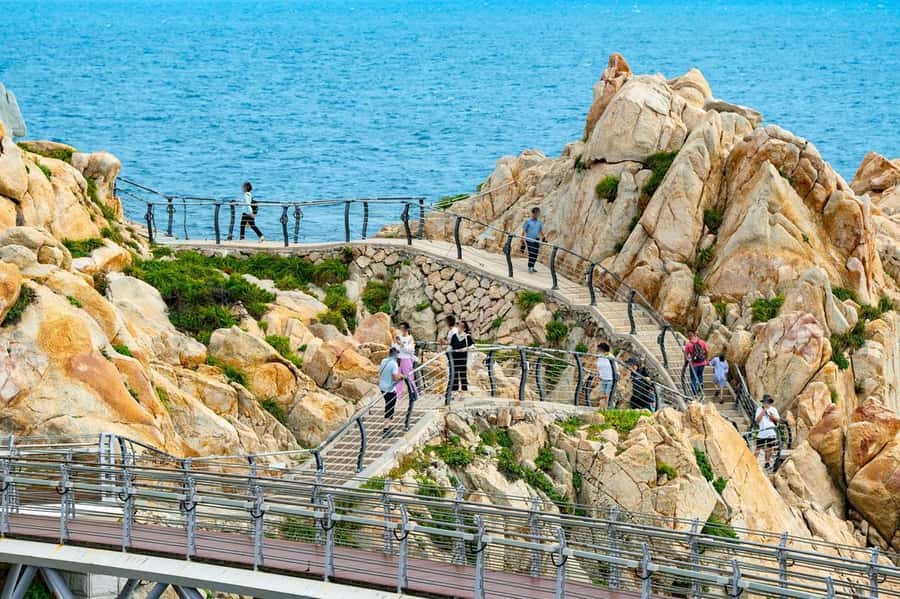
Daewangam Suspension Bridge brings sea air to the morning
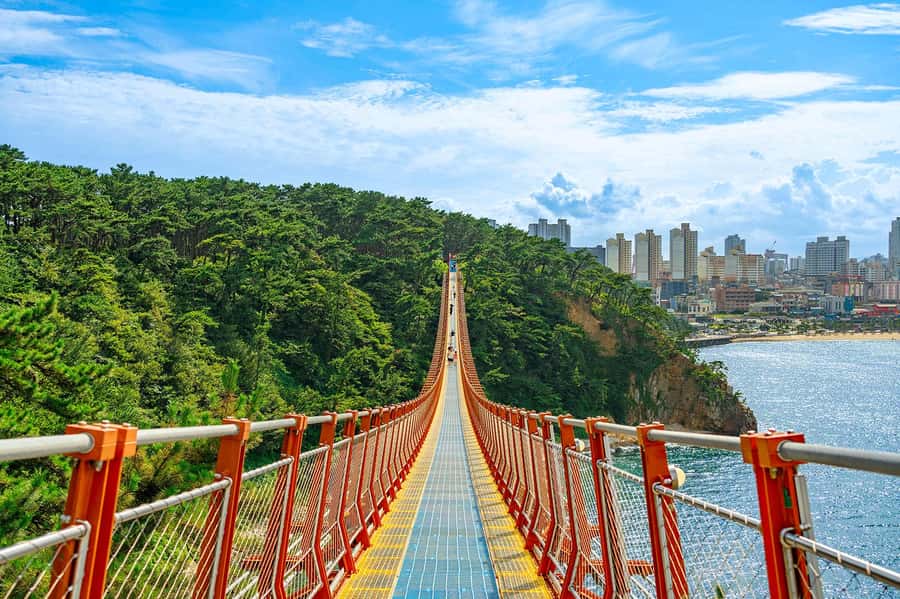
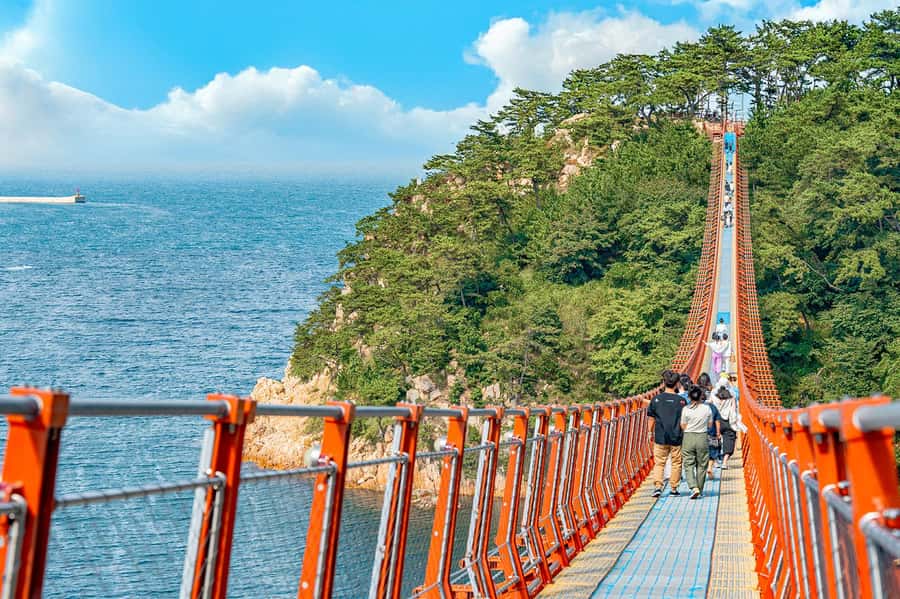
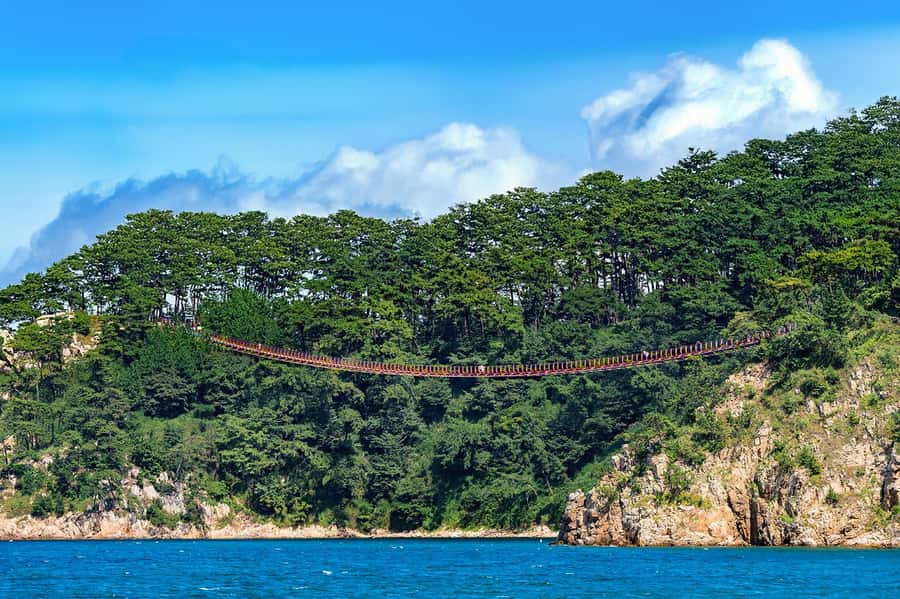
From September 15, 2025, the first major stop is Ulsan Daewangam Suspension Bridge. It replaces Seokguram Grotto on this version of the route.
The bridge gives the day a lively opening. You cross above rocks and sea, with a sense of height and movement that differs sharply from the quiet temple and tomb sites later on. It is a good choice if you want more than an exclusively historical tour.
The suspension bridge may be less appealing if you have a strong fear of heights or heart-related concerns. The tour information specifically says it is not suitable for people with heart problems. Weather can also affect the order, timing, or exact experience, so keep your schedule flexible.
If you are booking before September 15, 2025, check which first stop applies to your departure. The supplied route information clearly identifies Daewangam for departures from that date onward.
Bulguksa and the Silla art of stone
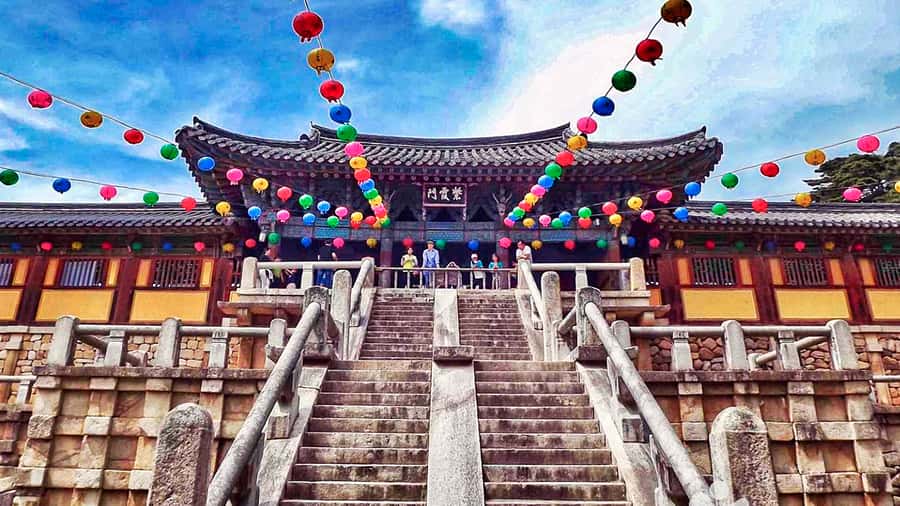
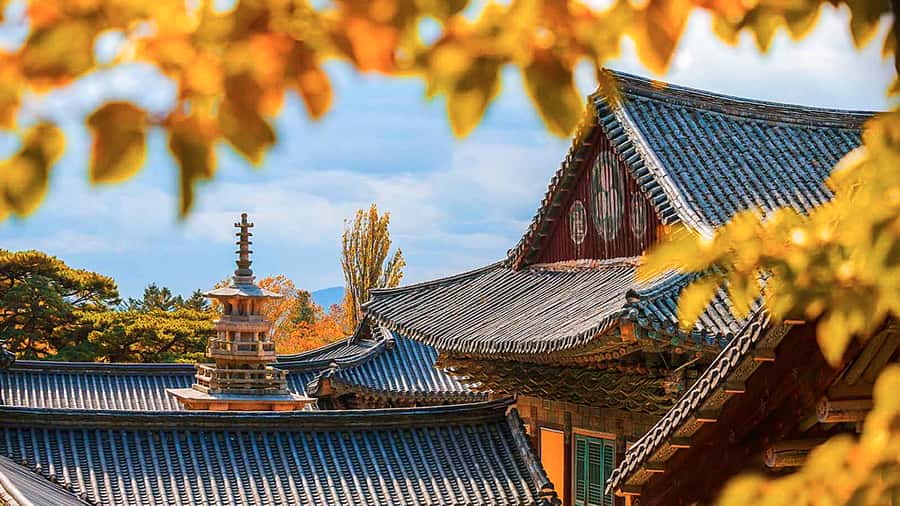
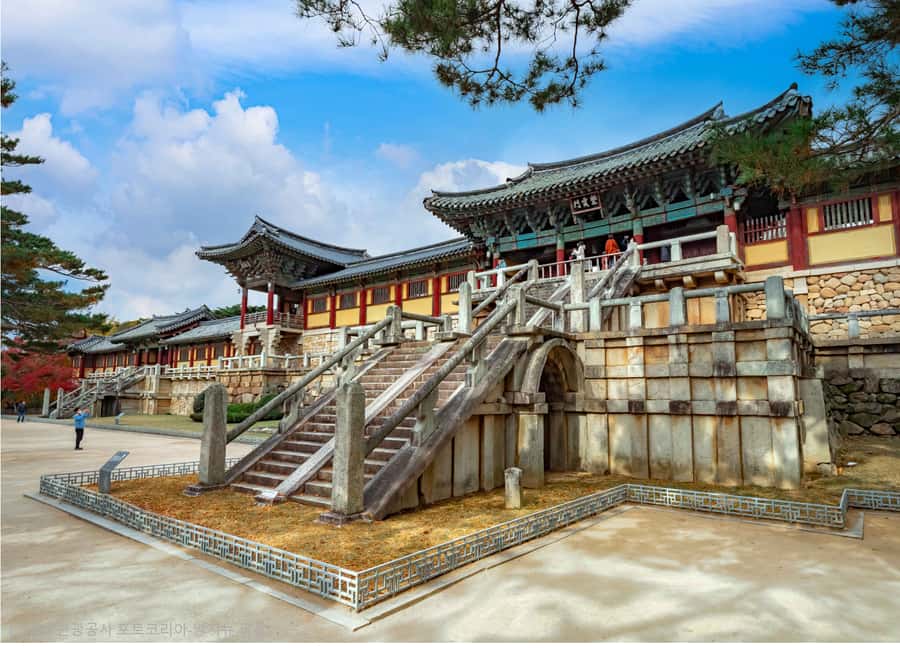
Bulguksa is the day’s major temple stop. Built on the slopes of Tohamsan, it is one of Korea’s best-known Buddhist sites and holds six National Treasures.
Look closely at the stonework rather than treating the temple as a quick photo stop. The Dabotap and Seokgatap pagodas are the main details to watch for. Dabotap, also written 다보탑, is familiar to many Koreans because it appears on the 10-won coin.
That small coin connection makes the monument easier to remember, but the real pleasure is seeing the scale and texture of the stone in person. A photograph cannot quite show how carefully the temple courts, steps, and pagodas fit together.
Bulguksa also gives the guide room to explain Silla Buddhism, art, and building methods. The timing here matters. You will have enough structure to understand the place, but this is still a shared day tour, not an open-ended temple visit. If you like sitting quietly, sketching, or photographing every roof detail, you may wish for more time.
Hwangnidan-gil mixes old Gyeongju with new tastes
After the temple, the tour shifts from major monuments to Gyeongju’s social center. Hwangnidan-gil is a pedestrian-only street lined with trendy shops and restaurants.
This is where Gyeongju feels young and easygoing. You can browse small stores, look at the street scenes, and try local snacks. The best-known bite is 10-won bread, or 십원빵, a warm snack named for the Korean coin and sold especially around Hwangnidan-gil.
Meals and drinks are not included, so this stop is useful as an informal chance to buy something. Keep in mind that the schedule may not provide enough time for a full sit-down meal. If you want to sample food, ask the guide how much free time you have before ordering.
I like this stop because it prevents the day from becoming a parade of ruins and temples. You see how historic Gyeongju functions now, with visitors, local businesses, photography spots, and food all sharing the same district.
Same country, a completely different kind of day:
- Private Gyeongju Tour – Explore Gyeongju UNESCO Sites
★ 5.0 · 272 reviews - Busan: Gyeongju UNESCO Legacy Tour with National Museum
★ 5.0 · 172 reviews - Gyeongju: UNESCO Heritage Tour Including Bulguksa Temple
★ 4.8 · 104 reviews - Gyeongju UNESCO World Heritage Sites and History Full-Day Tour with Lunch
★ 5.0 · 104 reviews
Daereungwon reveals the scale of Silla burial grounds
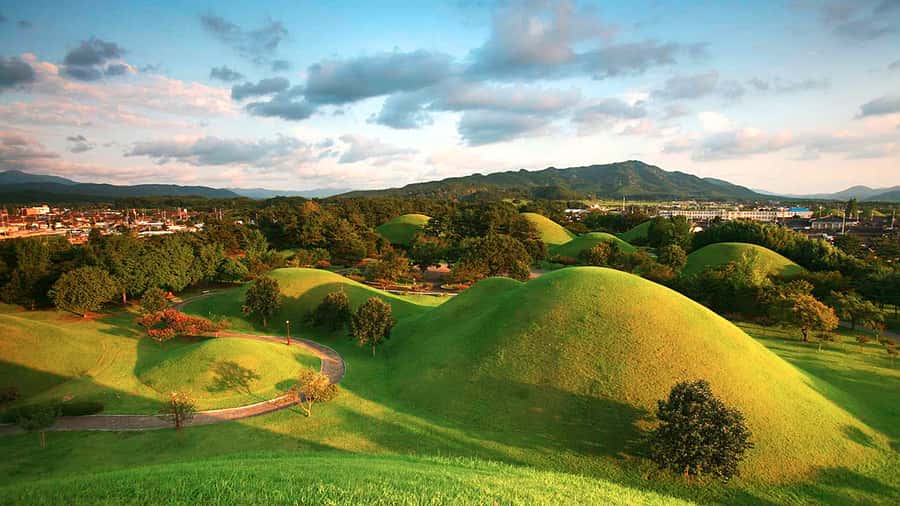
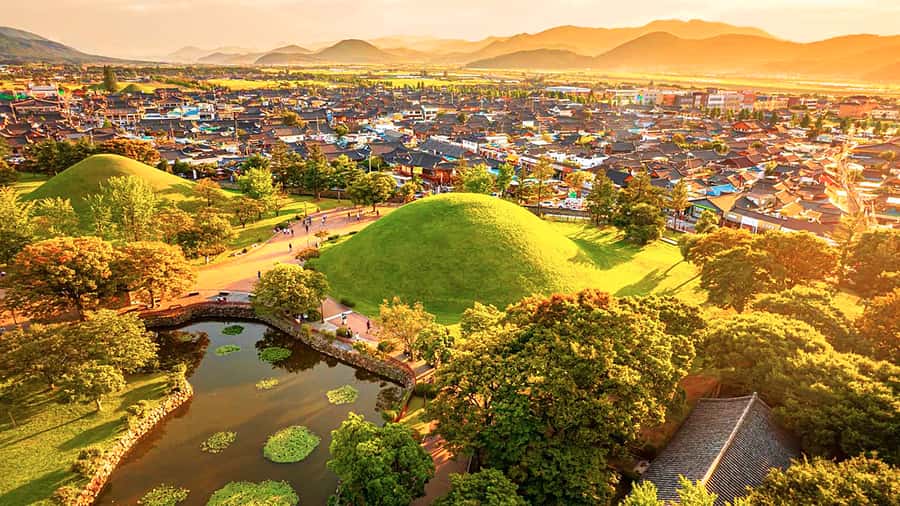
Right beside Hwangnidan-gil, Daereungwon offers a striking change of mood. The complex contains 23 tumuli, or large burial mounds, associated with Silla kings, queens, and nobles.
These grassy mounds are not just attractive shapes in a park. Their sturdy construction helped keep grave goods out of the hands of plunderers, which is why many objects survived. Some of those relics have later been named National Treasures.
The site helps you grasp the scale of Silla society. Royal power is expressed not through a single palace wall but through a whole field of carefully built tombs. From ground level, the mounds can look simple. The guide’s explanation is important because the meaning is easy to miss if you only take pictures.
Daereungwon admission is not included in the tour price. The tour information also lists admissions among the inclusions, so read the specific booking option carefully and budget separately for this complex. That small extra cost does not change the value of the transport and guiding, but it is worth knowing before departure.
Cheomseongdae turns astronomy into a photo stop
Cheomseongdae is described as the oldest astronomical observatory in Asia. Its stone form is compact and unusual, making it one of the easier Gyeongju monuments to recognize in photographs.
You will not need a long visit to appreciate its shape, but the explanation gives the stop more weight. It points to the scientific interests of Silla society, not only its temples, tombs, and royal families.
This is also one of the tour’s convenient photography stops. The surrounding historic area makes it easy to frame the observatory with the open setting around it. Your guide may also help point out good photo positions. Several guides have been praised for helping take group pictures, a useful service when you are visiting alone or with one other person.
Gyochon Traditional Village preserves a Joseon-era story
Gyochon Traditional Village brings you forward to the Joseon Dynasty. Its old hanok houses are linked especially with the Gyeongju Choi clan, an aristocratic family remembered as the Rich Choi Family.
The family controlled land in the area for about 400 years, across twelve generations. That detail gives the village a human story. You are not only looking at old roofs. You are seeing the kind of setting connected with one of the region’s most powerful landowning families.
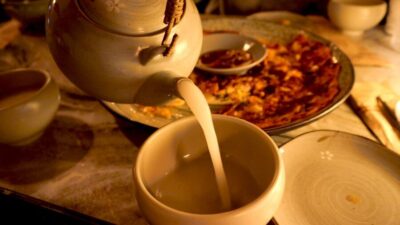
Gyochon also has a living food tradition. Gyeongju Gyo-dong Beopju, a traditional Korean rice wine, is brewed and sold in the village. It is an appealing place to notice how historic buildings can remain connected to local production and food customs.
Expect a quieter feel here than on Hwangnidan-gil. The two stops work well together: one offers shops and snacks, while the other gives you older houses and a more settled village atmosphere. Time may be limited, so focus on the lanes, house forms, and the rice wine tradition rather than trying to inspect every building.
Woljeonggyo finishes the day with timber and water
Woljeonggyo is beside Gyochon Traditional Village, making it a sensible final stop. The bridge dates back to the Unified Silla period, from AD 676 to 935, though the original structure was later destroyed by fire during the Joseon Dynasty.
The bridge was rebuilt in 2018 and is now described as Korea’s largest wooden bridge. That combination of old design and modern rebuilding is worth keeping in mind. You are seeing a present-day structure shaped by an ancient model, not untouched original timber.
Woljeonggyo is especially appealing for photography and quiet viewing. At the right time, the bridge can feel calm after the day’s movement between vehicles, streets, and monuments. One reported favorite moment is seeing the bridge lit up, when its wooden form becomes especially striking.
The exact arrival and departure time can change with traffic and weather. If you have an evening reservation in Busan, leave plenty of room. The tour returns to a Busan meeting point, but the drop-off time is not fixed to the minute.
What $47 covers, and what it does not
At $47 per person, this is priced as a practical sightseeing day rather than a luxury excursion. You receive round-trip transfers between the destinations, an English-speaking guide and driver, and attraction admissions as specified by your selected option.
The transport is the biggest part of the value. Gyeongju’s sights are scattered, and arranging the same route by local buses or taxis would take more time and attention. You also get historical context at places where a quick visit alone could leave you unsure what you are seeing.
Plan for extra spending on meals, drinks, snacks, private purchases, and Daereungwon admission. Hwangnidan-gil gives you a chance to buy food, including 10-won bread, but there is no meal package.
The vehicle may be a car, van, or coach depending on the number of participants. That means comfort and group feel can vary. A smaller group may make it easier to ask questions and move quickly, while a coach can feel less personal but offers a straightforward shared excursion.
The guide can make or break this busy day
The strongest part of the experience is the guiding. The praise centers on friendly service, clear explanations, good organization, and attention to the people in the group.
Leo is specifically noted for giving plenty of information while staying open and engaged with participants. Other departures may use different guides. One guide was described as fluent in English, Chinese, and Korean, which can be helpful on a mixed-language outing.
You can expect stories about history, art, and local culture rather than only directions from one stop to the next. Guides have also helped identify good photo spots and take pictures for participants.
That matters on a day with seven stops. A guide who can keep explanations focused helps you understand the sites without losing all your free time. Still, the quality of any departure depends partly on the individual guide and the group’s pace.
Who should book this Gyeongju day tour?
I would choose this tour if you are based in Busan and want a broad first look at Gyeongju without arranging several transfers. It suits first-time visitors, solo travelers, couples, and families with older children who can manage a long sightseeing day.
It is particularly good for you if you want a mix of:
- Silla temples and tombs
- Joseon-era houses
- Modern cafés and street food
- Sea views and a suspension bridge
- Strong photography opportunities
- A guide who explains what you are seeing
You may prefer a slower independent visit if your priority is spending half a day at Bulguksa, lingering over lunch, or exploring every lane around the central historic district. The tour is not suitable for wheelchair users, and infants must sit on an adult’s lap because baby seats are unavailable. Pets are not allowed.
Book with flexible plans if possible. The operator allows cancellation up to 24 hours in advance for a full refund, and you can reserve now and pay later. Political situations, extreme weather, and other unexpected destination events may lead to rescheduling or refund arrangements, but ordinary rain, snow, or sudden personal illness does not automatically qualify.
Should you book it?
Book this tour if you want maximum historical coverage in one day and value having the driving handled for you. The route gives you a strong sense of Gyeongju’s many sides: Buddhist art at Bulguksa, royal burial grounds at Daereungwon, food and shopping at Hwangnidan-gil, family history at Gyochon, and the elegant rebuilt form of Woljeonggyo.
Skip it if you need a relaxed pace, accessible transport, or full control over meal and sightseeing times. For most Busan-based visitors, though, $47 is a fair price for the distance covered and the guide support. Arrive early, wear comfortable shoes, bring money for food and Daereungwon, and leave your evening schedule open.
FAQ
Where does the tour start and finish?
The tour starts and ends at a designated Busan meeting point. Depending on the option booked, the meeting point may be near Haeundae Station or Seomyeon Station. Hotel pick-up and drop-off are not included.
What attractions are included in the route?
The route includes Ulsan Daewangam Suspension Bridge from September 15, 2025, Bulguksa, Hwangnidan-gil, Daereungwon, Cheomseongdae, Gyochon Traditional Village, and Woljeonggyo. Daewangam replaces Seokguram Grotto from that date.
Is food included?
No. Meals and beverages are not included. You can buy food and drinks during the day, especially at Hwangnidan-gil, where 10-won bread is a popular snack.
Is admission to Daereungwon included?
No. Admission to the Daereungwon Tomb Complex is specifically excluded and must be paid separately.
Is the tour suitable for infants?
Infants aged 0 to 2 can join free of charge if they sit on an adult’s lap. Baby seats are not available.
Can I cancel the booking?
You can cancel up to 24 hours in advance for a full refund. Late arrivals and no-shows cannot be refunded. The vehicle type and exact itinerary may change because of participant numbers, traffic, or weather.
Just added around Gyeongju
- Private World Heritage Gyeongju Taxi Tour★ 5.0 · 12 reviews
- Guided Car Tour in Geyongju with a Local Guide★ 5.0 · 38 reviews
- Gyeongju: Private Car Charter Taxi Tour★ 5.0 · 37 reviews
- From Daegu: Gyeongju UNESCO Tour 7 Highlights with Bulguksa★ 4.6 · 5 reviews
- From Busan: Gyeongju Small Group Photo Tour & Hotel Pick-up★ 5.0 · 3 reviews
- From Busan: Busan & Gyeongju One Day Tour★ 5.0 · 5 reviews
- Full day Private Gyeongju UNESCO Heritage Tour : a glimpse into Silla★ 5.0 · 60 reviews
- Gyeongju: Private Car Tour with a Licensed Tour Guide★ 5.0 · 85 reviews
City Tours, compared.
Best Seoul City Tour (Gyeongbokgung Palace,Insadong,Namsan Tower)
Read our review →
Small-Group Royal Palace and Seoul City Tour (hotel pick-up)
Read our review →
Seoul City Sightseeing Tour Including Gyeongbokgung Palace, N Seoul Tower, and Namsangol Hanok Village
Read our review →
Dark Side of the City and Ghost Stories Walking Tour
Read our review →
Seoul City Private Full-Day Tour Including Lunch
Read our review →
Seoul City Half Day Tour-Gyeongbok Palace Guard Changing Ceremony
Read our review →
Guided City Wall Sunset Hike with Korean Dinner
Read our review →Browse the lists this tour appears in